hotel
We treated the entire hotel as a single room
I like to say that one cannot be the first until one tries something for the first time
(click on image to view more)
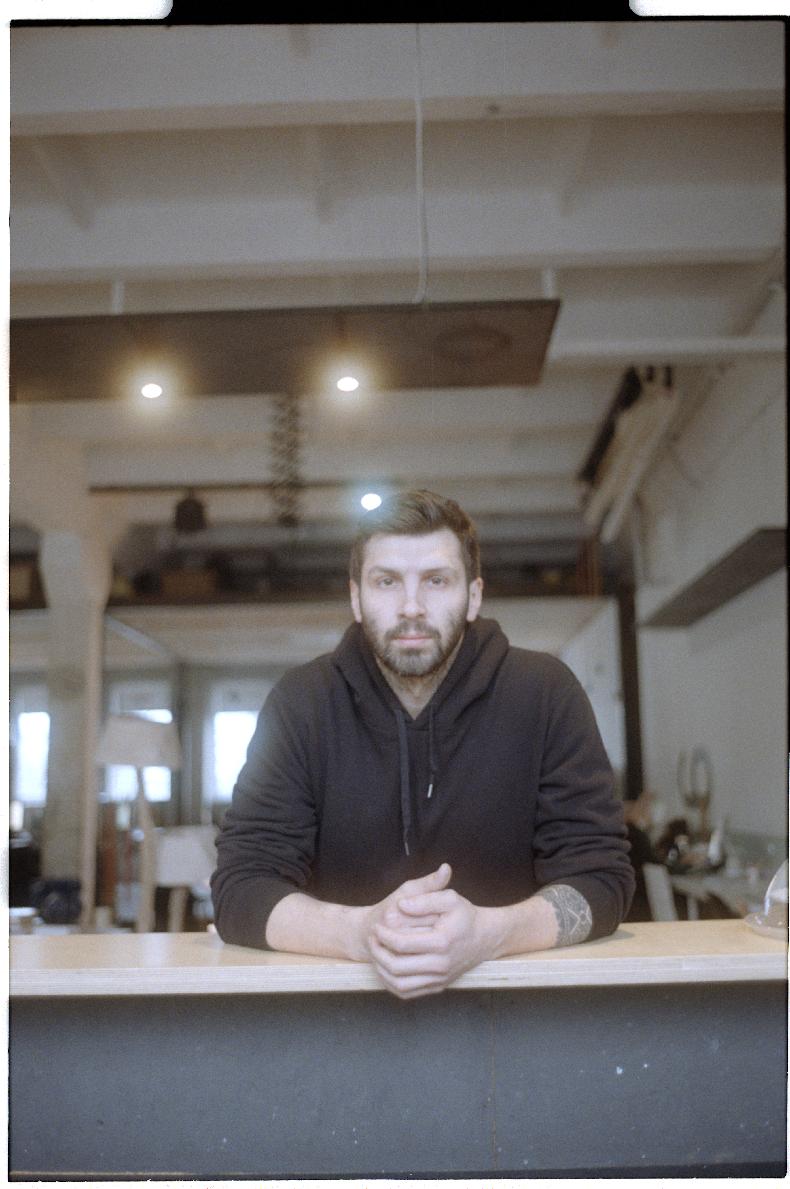
Leading architect of 2B.Group studio tells about peculiarities of his team’s work at BURSA Kyiv, about trims and sense of humour in interior.
– Tell us about history of 2B.Group studio.
– I arranged the studio 12 years ago together with Olga Bogdanova. We were in the same year at Kyiv National University of Construction and Arts. We completed one project. It was a tough experience, but we liked the way we found solutions to difficult problems, so we decided to continue. We still support each other. Now Olga is more involved in development of Ukrainian object design and its promotion abroad, and my work is architecture and design at 2B.Group projects. We also present ourselves as a team: working on a project of any complexity is never an achievement of a single person. Certainly everyone, from a senior architect to a trainee, has their own area of responsibility, but when we release a project, we always emphasize that it is a result of the entire studio’s efforts. Besides, the younger the person is, the more I try to give him/her incentive for self-fulfilment. It is one of the key factors why our team is so solid and ever-growing.
– When did you find out about BURSA Kyiv, and how long did your team work on this hotel?
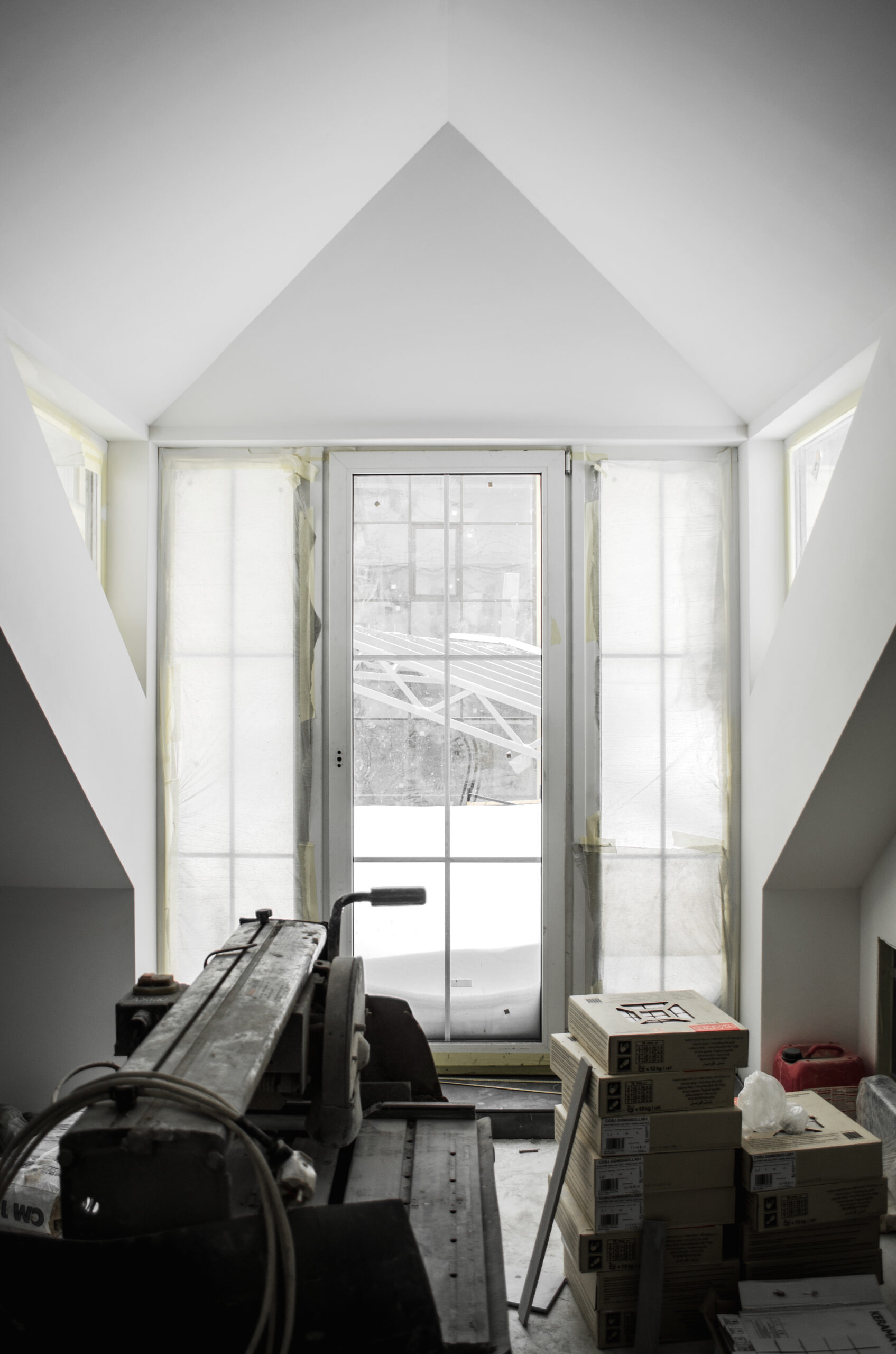
– Our studio started to work on this project in spring 2017, and initially we wanted to finish by the end of summer. I definitely bit off more than I could chew because I didn’t know how many people I would need to do that scope of work. Besides, we set the bar very high with regard to design quality and detailing. With hindsight, I realize that in fact we didn’t have a single day of delay. We rearranged the project many times, did loads of drawings, changed contractors many times. It is cool to work with General Manager Vasya Grogol because he participates in the process with all his heart and mind, and I am pleased with that. If we had a different type of client, someone less active and wishing success to the project, I would have quitted. But we had a common mental goal, and that’s why we completed the project together. This is the first hotel of this kind in Kyiv or even in the entire Ukraine, and I would like to be a part of everything new.
– Please tell us about your project team.
– The team included architects Andrei Berezinsky, Dasha Ovechenko and Natasha Kurilenko, designer Liuba Myronchuk, object designer Lesha Kharo and project manager Borya Dorogov. All architects are young, which is an advantage and a downside at the same time. The downside is that these people have never worked together as a team. They have approximately the same level of skills, but none is an obvious leader who could do supervision and assignment of tasks. I had to appoint a supervisor responsible for every field of work. I think it is more feasible to organize work differently: one strong leader, a couple of mid-level professionals and a few trainees doing technical work. It won’t be an overestimation to say that Vasya’s participation in this project is a big magnet keeping everyone together. No other project of our studio can boast such extensive correspondence in Telegram. I look through it every day, it’s like reading a soap opera script. The most difficult thing in a project is crazy logistics. Once you have got design and paperwork ready, you must prepare design specifications for each element, then find a contractor, do all calculations, get approvals, and if the contractor cannot keep within the budget, you must find another one, and there you go again. For instance, once we wanted to do a photo shoot of everyone who worked on 75 sq. m apartment project. It turned out to be 86 people…
...86?!
– Yes, by everyone I mean all who fastened or glued anything once, delivered anything or did anything for the project. Manpower involved is just massive.
– So how many would be involved in BURSA Kyiv project then? Are we talking about hundreds?
– That’s the point. More.
– How would you describe the project concept?
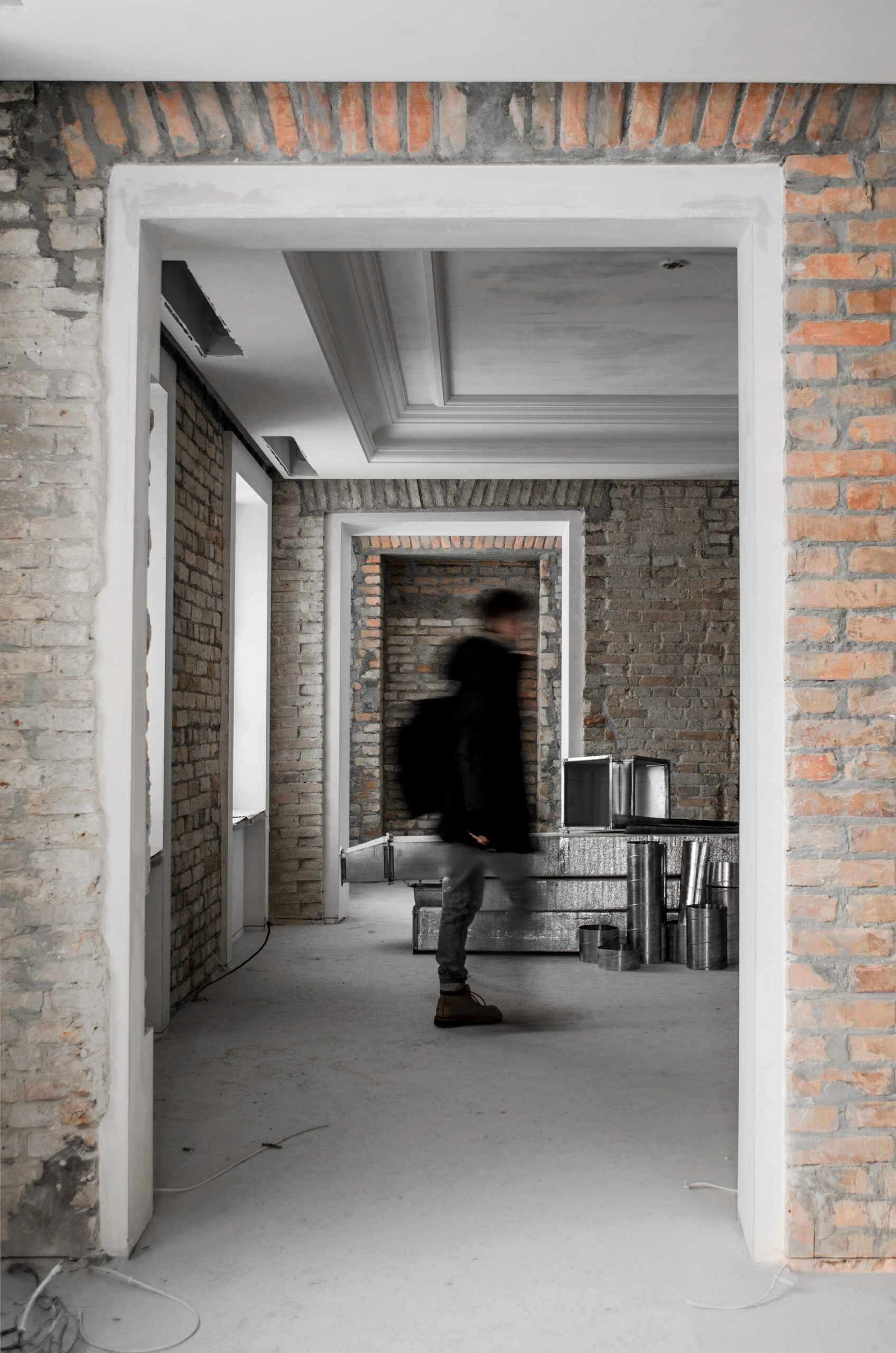
– A common thread running through the entire design is Bauhaus style principles. I would not limit the concept to this style only, but that’s how we call it among ourselves. Simplicity and industrial flavour, counterpoint, and details that won’t catch a stranger’s eye at once. For instance, we use such technique as a trim, when one horizontal or vertical plane does not touch the other. This functional joint is technically challenging to make, but in reality one can see that one material stands apart from another by 10 mm. There are plenty of such trims at the hotel, and it looks cool. At first construction workers didn’t understand what we wanted from them, but they have becomes pros by now. We spent tons of money on aluminium profiles alone. We were this close to stopping production of these parts in Ukraine. Just kidding.
– What about furniture?
– We used an interesting approach to furniture as well. In common rooms all furniture is second-hand. We went to Paris, combed through flea markets there, bought some old arm-chairs. Some members of the team went to Norway searching for furniture there, taking photos of samples. Furniture in all hotel rooms is Ukrainian-made. Beds, arm-chairs, chests of drawers and bedside tables have a tubular structure. We started to develop them simultaneously with the rest of design. It was extremely difficult to find a perfect combination, a perfect incline for the structure to bear the weight of a mattress. It took us four months to develop a prototype. What mattered for us is tactile quality, dull roughness of the product. In the end I appointed one person who was responsible for the bed alone.
– So it looks like every item here has its history.
– Precisely. There is not a single element at BURSA Kyiv that was easy to do or to find. Every lamp, switch or cord leading to a socket has its history and its logic.
– What is the specific feature of planning a hotel as a public space?
– There is a saying that architecture means usefulness, strength and beauty. And that’s the very principle applied to building a public place: useful in the first place, then strong and beautiful. The most important is people’s safety. There are a number of other standards and rules that are a must when dealing with hotels. For instance, one of the main factors is noise level in decibels. We promote industrial style, so we wanted cast-in-situ concrete floors and high open ceilings everywhere. In the end, where we have an open ceiling, there is a fitted carpet in the room above, and, vice-versa, where we have a stone floor, there is an insulated gypsum board ceiling in the room below. There are lots of rules one has to stick to for the hotel to meet the world standards. And that was the job of the leading architect of our project, Andrei. There was a private joke that every time we made up something cool in terms of design, Andrei would show up and say that there had to be a fire partition there instead. But rules are rules, and it is great that there are people on the team, for whom it is a priority.
– What is your definition of BURSA Kyiv spirit?
– I’d like to think it is very youth-oriented. Everyone involved in this process is a young professional. I think not everyone would appreciate uncovered bricks or profile sheets, but there are many free-thinking people who understand that this is an international beauty. Simplicity and attention to detail is appreciated all over the world. This is design beyond time and space. And I like it that there is a sense of humour in interior.
– And how can one express a sense of humour in interior?
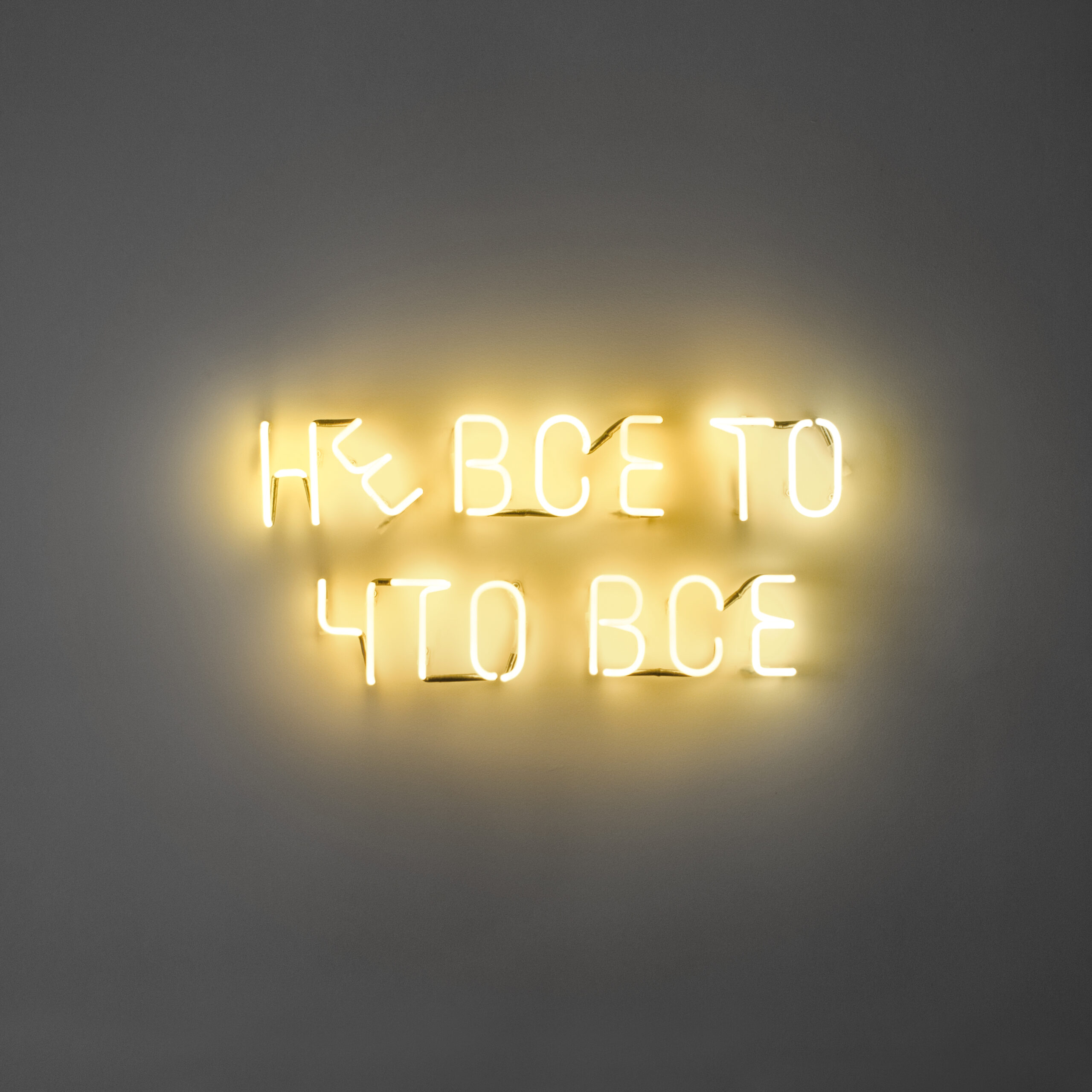
– Through the range of colours used, and logotype looking like a pile of letters. Just compare it with Hyatt, for example. Absurd neon writings in every room. By the third room we had run out of ideas, so Vasya posted a request for funny phrases in Facebook. This is also a part of dialogue with guests. Because what a person memorizes well is a good mood.
– How would you like BURSA Kyiv to fit in on Podol?
– This is not a place for selected few, for some special crowd. I don’t want anyone to feel uncomfortable about dropping in just because this place seems too…
– trendy?
– Yes, it’s a place next door, so atmosphere must be very relaxing. This place is open to everyone. A guest should not be afraid of breaking or damaging anything, that’s why we have second-hand furniture in all common rooms. You take a seat at the table, spill some wine – wipe it off and forget about it. There is nothing too fancy, nothing to repel you.
– So there are no rules like “do not put a hot cup on plastic surface”.
– Exactly. It should be a free place for free people.
– How do you feel about today’s Kyiv and Podol in particular?
Well, our work is public places and the first question we ask before starting design is whom this place is for. Now I have a better understanding of how versatile the scope of social groups and micro-groups is in this city. I can identify vibes of my own surroundings, but I understand that my environment is hardly one fifth of what is going on in the city, let alone Podol. Podol is a cluster of new trends one cannot keep up with. About 5 new facilities open up there every day. It is a crazy progress – and the coolest thing we have now in Kyiv and in Ukraine in general.